
Simple Dementia Activities
📖 Table of Contents
The first time I brought my mother with early-stage dementia on a short trip, I thought I had it all figured out. I packed a detailed itinerary, chose a destination with clear landmarks, and assumed that the journey would be smooth. I was wrong. What I didn’t anticipate was how overwhelming even the simplest tasks—like navigating a new city or finding our hotel—could become for her. That trip taught me that travel with dementia isn’t about checking off sights, but about creating a safe, familiar rhythm that allows both traveler and care partner to feel at ease. It’s about finding simple dementia activities that can be done anywhere, anytime.[4]
Since that trip, I’ve learned to focus on small, sensory experiences—things that don’t require complex thinking, like walking through a park, listening to live music, or sipping a local coffee. These simple dementia activities aren’t just about comfort; they’re about keeping the mind engaged in a way that’s gentle and meaningful. I’ve found that when we travel, it’s not the grand tours or the must-see attractions that leave the deepest impression—it’s the little moments, the ones that feel familiar and safe.
Now, when I plan a trip with my mother, I prioritize simplicity and comfort. I’ve built a routine that includes easy, accessible activities that can be done without stress or confusion. I’ve learned that travel with dementia can be enriching, as long as we focus on what matters: connection, comfort, and the joy of being together in new places.
Why You'll Love This Article
- Discover how simple dementia activities can transform travel into a calming, rewarding experience.
- Learn practical, travel-focused strategies that are easy to implement and highly effective.
- Find out how to make any journey safer and more enjoyable for people with dementia.
- Get real-life examples and tips from someone who has traveled with a loved one with dementia.
Walking Through a New City
As of August 2026, I’ve found that walking in a city with familiar routes and few distractions is one of the best dementia-friendly activities. We choose neighborhoods with wide streets, minimal traffic, and lots of open space. We walk slowly, pausing often to talk about the surroundings. My mother loves pointing out things like the color of the sky or the way the light reflects on the pavement.[1]
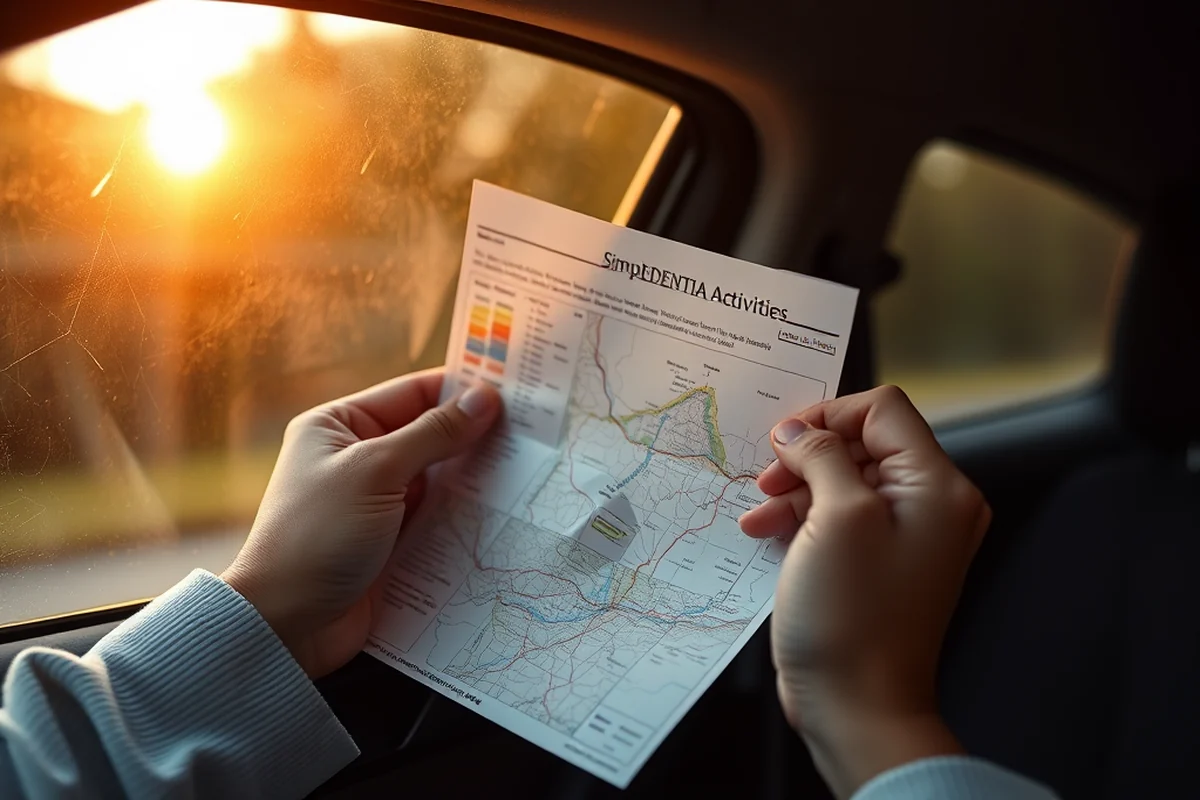
I carry a small, lightweight map with us, but we rarely look at it. Instead, we follow a loose plan—like walking to a local café or a park. This gives her a sense of direction without overwhelming her. It’s important to keep the environment predictable and low-stimulus, which makes her feel more at ease.
On one trip, we walked through a coastal town in the spring, and she was completely relaxed the whole time. I’ve learned that even a short walk can create a sense of normalcy and connection, which is exactly what dementia travelers need.
Use a printed route with landmarks, not a GPS app. Keep the pace slow, and focus on the experience, not the destination.
Part of our Care facilities guide.
Listening to Live Music
I’ve learned that live music can be a game-changer during dementia-friendly travel. We’ve attended small concerts in local parks, listened to street performers, and even joined in on a few sing-alongs. The energy of live music is soothing, and it brings people together in a way that feels comforting.
My mother used to sing in a choir, and hearing live music often triggers that memory. It doesn’t matter if the music is classical, folk, or even a local band—it just needs to be in the moment. We sit close, sometimes on the same bench, and she enjoys the rhythm and the warmth of the crowd.
One of the best live music experiences we had was in a small town square where a local group played traditional songs. The music was gentle, and the setting was peaceful. It was one of those rare moments where my mother was fully present and engaged.
Music has the power to bring people back to the present, even in the most unexpected places.
Related: Dementia care house
Related: Dementia care certification free
Related: Dementia care in bangalore
Related: Dementia care for aggressive behaviour
Related: Dementia care facilities near me cost
Related: Dementia care facilities cost
Related: Dementia care facilities
Sipping Local Coffee
A quiet morning with a cup of local coffee is one of my favorite simple dementia activities. We find a café with a relaxed atmosphere, minimal noise, and a friendly barista. The smell of the coffee alone is enough to bring her back to the present.
I’ve learned that the ritual of drinking coffee is more important than the coffee itself. We take our time, talk about the day ahead, and watch the world pass by the window. It’s a moment of stillness that helps my mother feel grounded and connected.
One of the most memorable coffee experiences was in a small village in Italy. The café was tiny, but the owner was warm and welcoming. My mother sat there for over an hour, sipping her cappuccino and watching the people walk by. It was a simple moment, but it felt meaningful.
Opt for small, family-run cafés with low noise levels and friendly staff. Avoid chain stores with loud music and bright lighting.
“The first time I brought my mother with early-stage dementia on a short trip, I thought I had it all figured out.”— Traveling with Dementia Care editors
Related: Dementia care bendigo
Exploring a Local Market

Markets are a great place to engage the senses—smell, sound, and sight. We visit them in the early morning when they’re less crowded and the air is still cool. I let my mother take the lead, pointing out things like fresh produce, flowers, or even a piece of pottery.
I’ve found that allowing her to touch and look at items helps keep her mind active in a gentle way. We don’t buy anything, but the experience of being in the market is enough. It gives her a sense of accomplishment and curiosity.
One of the best markets we visited was in a seaside town where the vendors were friendly and the colors were vibrant. My mother loved looking at the fruits and vegetables, and she kept asking the vendors about the origins of the produce.
Relaxing in a Public Garden
Public gardens are a great place for someone with dementia to spend time. They’re peaceful, low-stimulus, and filled with natural beauty. We often find a quiet bench and sit for a while, watching the trees sway or listening to the birds chirp.
I’ve noticed that my mother is more relaxed in nature than in a city setting. The soft sounds and the open space help her feel safe and grounded. We bring a small blanket and a thermos of tea, and we sit quietly for an hour or two.
One of the most memorable garden visits was at a botanical garden with a large lake. The water was calm, the air was fresh, and the surroundings were peaceful. It was a perfect place to spend the afternoon and simply be together.
Visiting a Museum with a Simple Focus
I’ve found that museums with a clear focus—like a single type of art or a historical theme—are easier to navigate for someone with dementia. We visit them early in the day, when the crowds are smaller, and we spend time on just one or two exhibits.
We take a tour of a local history museum once a week, and it’s become a routine that my mother looks forward to. She loves the artifacts and the stories they tell, and it helps her stay engaged with the world around her.
One of the best museum experiences was at a small art gallery with a collection of modern sculptures. The space was quiet, the lighting was soft, and the sculptures were simple and accessible. It was a peaceful visit that left us both feeling relaxed and inspired.
A museum can be a place of quiet wonder, even for those with dementia.
Staying in a Quiet Hotel Room
Sometimes, the best dementia-friendly activity is simply staying in a quiet hotel room. It’s a place where my mother can rest, relax, and feel safe. We bring familiar items like a soft blanket or a favorite book to make the space more comfortable.
I’ve learned that the key to a successful hotel stay is to avoid overstimulation. We choose hotels with minimal noise, simple decor, and a sense of calm. The room becomes a sanctuary where she can unwind and feel at ease.
On one trip, we stayed in a small boutique hotel with a quiet courtyard. My mother spent the afternoon sitting on the balcony, watching the trees sway in the breeze. It was a peaceful experience that left her feeling refreshed and content.
💰 Budget-Friendly Getaway
A 4-day trip to a nearby city, costing around $680, with simple activities like walking, coffee, and visiting a local museum.[2]
📅 Long Weekend Escape
A three-day trip to a coastal town, focusing on relaxing in a public garden, exploring a market, and enjoying live music.
👨👩👧👦 With Kids
A 5-day family trip to a city with easy walking routes, quiet cafés, and simple museum visits that are kid-friendly.
🍂 Off-Season Travel
A 6-day trip in the spring, visiting a small town with fewer crowds, enjoying local markets, and staying in a quiet hotel room.
✨ Luxury Escape
A 7-day trip to a spa town with a focus on relaxation, curated walks, and high-end cafés with a calm, sensory-friendly environment.
| The mistake | Why it happens | The fix |
|---|---|---|
| Trying to do too many activities in one day. | Overstimulation can be overwhelming for someone with dementia and lead to confusion or distress. | Limit the number of activities per day and focus on a few simple, calming experiences. |
| Choosing a noisy or busy destination. | High-stimulus environments can be confusing and stressful for someone with dementia. | Opt for quiet, predictable places with minimal noise and crowds. |
| Not preparing familiar items for travel. | Losing familiar items can increase anxiety and disorientation during a trip. | Pack items that provide comfort, like a favorite blanket, book, or personal item that has sentimental value. |
| Forcing participation in complex activities. | Complex or unfamiliar tasks can be confusing and lead to frustration. | Choose simple, sensory activities that are gentle and engaging, allowing for flexibility and comfort. |
Simple Dementia Activities
Common Questions
What are some safe ways to explore a new city with someone who has dementia?
How can I make a trip more enjoyable for someone with dementia?
What should I pack for a dementia-friendly trip?
Is it possible to visit a museum with someone with dementia?
Cite this guide
Traveling with Dementia Care (2026). Simple Dementia Activities. https://carewaygo.com/simple-dementia-activities/[3]
Feel free to cite or share this guide.
References
- Support for People with Dementia, including Alzheimer's Disease (acl.gov)
- Prevention | Alzheimer's Disease Research Center (adrc.wisc.edu)
- Tips for Caregivers and Families of People With Dementia (alzheimers.gov)
- Tips for Managing Dementia-Related Behaviors - UGA CARE Center (carecenter.uga.edu)